

M2P Fintech
Fintech is evolving every day. That's why you need our newsletter! Get the latest fintech news, views, insights, directly to your inbox every fortnight for FREE!
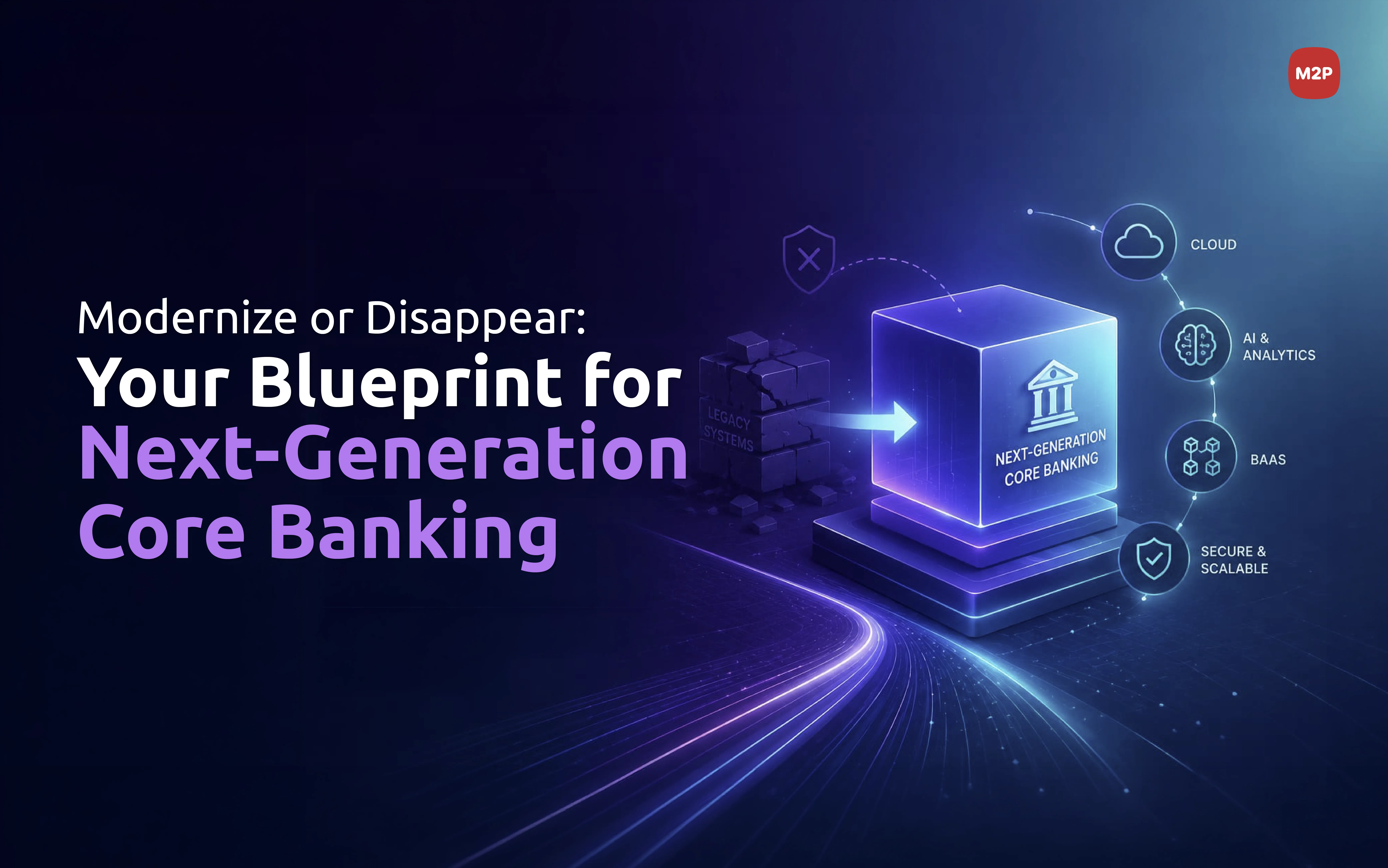
The banking industry is at a pivotal moment. The monolithic, legacy core banking systems that have been the bedrock of financial institutions for decades are now becoming their biggest liability. In an era of digital disruption, where fintech startups and neobanks are setting new standards for customer experience and agility, traditional banks face a stark choice: modernize or risk becoming obsolete. This blog post explores the critical journey of core banking modernization, from the compelling reasons to change to the futuristic technologies and business models that will shape the bank of tomorrow, drawing lessons from institutions that have successfully navigated this complex transformation.
Legacy core banking systems, often built on mainframe technology and coded in languages like COBOL, are the primary culprits behind the banking industry's innovation inertia. While once reliable, these systems now present a host of challenges that directly impact a bank's competitiveness and bottom line.
Architectural Rigidity: The monolithic nature of legacy systems makes even minor changes a complex, time-consuming, and expensive endeavor. Technical and system limitations cause significant delays in launching new products and services, hindering a bank's ability to respond to market demands
Spiralling Operational Costs: Maintaining these aging systems is a significant financial drain. The scarcity of skilled professionals proficient in older programming languages drives up labor costs, and licensing fees for proprietary software can be exorbitant. Research suggests that banks still running on outdated cores have operating costs that are, on average, ten times higher than those with modern systems. Decommissioning these high-maintenance systems is a primary driver for modernization, with some transformations resulting in a 30% to 40% reduction in IT maintenance costs
Data Silos and Inconsistencies: Legacy systems often trap valuable customer data in fragmented silos, making it incredibly difficult to achieve a single, unified view of the customer. This can lead to issues like duplicate data capture and the lack of a master account concept, which hampers efficiency and customer service. National Australia Bank (NAB), for instance, had to migrate data from a 40-year-old IMS database that was so outdated it couldn't even handle modern data types like email addresses
Security and Compliance Risks: Older systems were not designed for today's sophisticated cybersecurity threats. They often have outdated encryption standards and limited monitoring capabilities, exposing banks to significant security and compliance risks
Integration Hurdles and Operational Failures: In the age of open banking, the inability of legacy systems to easily integrate with modern applications and third-party services via APIs is a major roadblock. Furthermore, these systems can lead to catastrophic operational failures. IT outages at NAB, which left thousands of customers unable to access their funds, starkly highlighted the constraints of its legacy batch processing systems and validated the decision to overhaul the core platform
The path to a modernized core is not a one-size-fits-all solution. Banks must choose a strategy that aligns with their specific needs, risk appetite, and strategic goals. The two primary paths are the high-risk "Big Bang" and the more cautious "Progressive Modernization".
The "Big Bang" or "Full Replacement" strategy involves a complete and simultaneous overhaul of the legacy core, replacing it with a new platform in a single event. This "open heart surgery" for a bank's IT infrastructure is the most expensive and riskiest option.
Benefits: A successful Big Bang provides a clean slate, immediately eliminating legacy constraints and providing instant access to modern capabilities like real-time processing. It also avoids the complexity and cost of running two systems in parallel post-launch
Drawbacks: This approach is fraught with risk, including catastrophic system failures, massive budget overruns, and significant operational disruptions that can damage a bank's reputation. The lack of a fallback plan is a major concern, and the intense pressure can lead to critical oversights. Due to this unpredictability, the strategy has faced pushback from regulators
Suitability: The Big Bang is generally not suitable for most large institutions. It is best reserved for smaller, less complex banks, new "greenfield" digital banks, or institutions where the legacy system is on the verge of collapse and poses an immediate, unacceptable risk. It requires an exceptionally high-risk appetite and robust execution capabilities
Given the immense risks of the Big Bang, most institutions opt for a progressive or phased modernization strategy. This involves a gradual replacement of the core system, allowing old and new systems to coexist for a period. This can be achieved by upgrading individual components, augmenting the core with a new "shell" system, or running a "sidecar" core for new products. This approach minimizes disruption, allows for a more agile transformation, and provides a faster return on investment. The successes of DBS Bank and National Australia Bank serve as powerful blueprints for this strategy.
A successful core banking modernization is not just a technology project; it is a profound organizational and cultural transformation. The prevailing culture in traditional banking is often a primary roadblock to success. Overcoming legacy mindsets requires a multi-faceted approach focused on leadership, collaboration, and talent.
Fostering an Agile and Innovative Culture
Leadership Buy-In and Vision: Transformation must start at the top. Leaders must champion the vision for modernization, moving beyond legacy models and assumptions. This involves clearly communicating the strategic imperatives for change, leading by example in embracing agile principles, and creating a compelling narrative around the value of the project
Empowering Cross-Functional Teams: Breaking down silos is crucial for agility. Banks must shift from hierarchical decision-making to empowering cross-functional teams composed of individuals from IT, operations, and marketing. This move from project-based delivery to product-based teams organized around banking domains accelerates decision-making and improves knowledge sharing
Adopting a "Progress-over-Perfection" Mindset: The pursuit of perfection can stifle innovation. Banks should adopt an iterative "test-and-learn" approach, where customer-centric solutions are implemented quickly and refined based on rapid feedback. This "fail-fast" mindset encourages experimentation and intelligent risk-taking
Aligning Incentives and Metrics: Traditional performance metrics may not support an agile culture. Reward systems should be redesigned to recognize and incentivize collaboration, innovation, and agility. A structured approach like the 4M methodology (Model, Method, Mindset, Metrics) can help guide this cultural shift by implementing new metrics to track progress
Modernization creates a significant skills gap, as many traditional roles become obsolete while demand for new IT roles rises. A dual strategy of reskilling the current workforce and attracting new talent is imperative
Reskilling the Existing Workforce: Banks should invest heavily in upskilling and reskilling programs focused on digital tools and new ways of working. Leading banks are establishing internal "academies" and partnering with tech firms to offer accelerated training in DevOps, data engineering, and API management. A key focus is reskilling employees to work alongside AI, which is expected to transform a significant portion of banking work by 2030. This can be scaled by identifying "skill adjacencies," where complementary skills from previous roles can be adapted to new ones, such as training tellers to become "universal bankers"
Attracting New Talent: The banking industry is now competing directly with big tech for top talent. To succeed, banks must offer a compelling Employee Value Proposition (EVP) that includes cutting-edge work, competitive pay, flexible arrangements, and clear career paths. Investing in a modern tech stack makes banks more attractive to developers. Furthermore, fostering a diverse and inclusive work environment is a significant advantage. Banks can also forge strategic alliances with universities and tech firms through joint innovation labs and talent secondments to source specialized skills
At the heart of core banking modernization lies a suite of powerful technologies that enable agility, scalability, and innovation
Cloud-Native Architecture: This is the foundation for the future. Unlike simply moving old applications to the cloud, a cloud-native approach leverages the cloud's inherent scalability and resilience, allowing banks to scale on demand, enhance agility, and move to a flexible pay-as-you-go cost model
Microservices Architecture: This approach breaks down large applications into a collection of small, independent "digital Lego blocks". Each service handles a specific function (e.g., payments, loan origination) and can be developed, deployed, and scaled independently, which dramatically increases agility and resilience
APIs (Application Programming Interfaces): APIs are the connective tissue of the digital ecosystem. An API-first approach enables seamless integration with fintech partners and third-party providers, fostering an open, collaborative ecosystem that allows banks to offer a wider range of innovative services
A modernized core is the prerequisite for leveraging the next wave of futuristic innovations that are poised to revolutionize the banking landscape. The NextGen program at NAB, for example, laid the groundwork for future digital self-service add-ons and broader automation.
Modern cores provide the clean, unified, and accessible data streams necessary to power sophisticated AI and ML models, moving far beyond what legacy systems can support.
Hyper-Personalized Customer Experiences: AI can analyze vast amounts of real-time customer data to anticipate needs and proactively offer tailored financial advice. Predictive analytics can trigger microservices to deliver hyper-personalized product offers at the exact moment of need
Real-Time Fraud Detection: Unlike traditional rule-based systems, ML models can analyze transactions as they happen to identify suspicious patterns and anomalies. These models adapt continuously to new fraud tactics, blocking fraudulent activity instantly while reducing false positives that inconvenience customers
Sophisticated Risk Management: AI automates and enhances risk assessment. ML models can analyze a wider range of data for more accurate credit scoring, automate loan origination, and dynamically adjust pricing based on real-time risk profiles. This also strengthens compliance by automating AML and KYC checks
Autonomous Finance: This is the next frontier, where AI-driven systems execute financial tasks independently. This includes AI-powered chatbots for 24/7 service, fully automated loan processing, and "self-driving money" systems that optimize a customer's financial health with minimal intervention
Blockchain and Distributed Ledger Technology (DLT) offer significant potential to revolutionize traditional banking by increasing speed, transparency, and security.
Streamlining Cross-Border Payments: Traditional cross-border payments are slow and expensive due to multiple intermediaries. DLT enables near-instant settlement, often within minutes, by eliminating these intermediaries, which significantly lowers transaction fees. A joint study by the Monetary Authority of Singapore and the New York Federal Reserve demonstrated that DLT can facilitate safe and efficient cross-border payments in near real-time
Transforming Trade Finance: DLT can digitize the paper-intensive process of trade finance. By creating a single source of truth, it enhances transparency and traceability for all participants in a supply chain. Smart contracts can automate key steps, such as payments, reducing manual processing, costs, and the risk of fraud
Decentralized Finance (DeFi): DeFi represents a paradigm shift, using public blockchains and smart contracts to rebuild financial services like lending and trading without central intermediaries. It operates on principles of being non-custodial, transparent, and permissionless. While DeFi poses a competitive threat by offering lower costs and higher yields, it also presents opportunities for banks to create hybrid models, integrating DeFi protocols to offer innovative products
Challenges to Adoption: Despite the potential, widespread adoption faces hurdles including regulatory uncertainty, scalability issues on public blockchains, a lack of interoperability between different platforms, and the complexity of integrating with legacy systems
The metaverse, a persistent and shared virtual space, is quickly becoming a new channel for customer engagement. Banks are experimenting with these immersive worlds to create virtual branches and develop financial products for the growing virtual economy.
Virtual Branches and Avatar-Based Service: Institutions are establishing a presence in popular metaverse platforms like Decentraland and The Sandbox. JPMorgan launched its "Onyx lounge," while HSBC invested in virtual real estate to connect with gaming enthusiasts. These virtual branches allow customers, as avatars, to interact with avatar based customer service representatives for support or have in-depth consultations with financial advisors. South Korea's Kookmin Bank has created a VR branch for one-on-one consultations, and Bank of America uses VR to train employees by simulating customer interactions. This approach aims to restore a personal connection often lost in digital banking
Financial Products for the Virtual Economy: The metaverse's economy requires new financial services. Banks are exploring digital asset management for cryptocurrencies and NFTs, NFT-backed lending, and financing for virtual real estate. They are also building the payment rails to enable seamless transactions within and between virtual worlds. Startups like Zelf are positioning themselves as "banks for the metaverse" to facilitate these cross-world transactions
Technological Hurdles and Infrastructure: A robust metaverse presence requires a foundation of AR/VR hardware, blockchain and Web3 for decentralized asset ownership, AI to power avatars, and high-speed 5G connectivity. However, significant challenges remain, including security risks like identity theft, an undefined regulatory landscape for AML/KYC compliance, and barriers to user adoption like the high cost of VR hardware and a lack of trust
The Internet of Things (IoT) connects a vast network of devices, creating real-time data streams that allow banks to integrate financial services into customers' daily lives.
Seamless Everyday Banking and Automated Payments: IoT enables more automated and convenient banking. Wearable devices are used for contactless payments, while IoT sensors in ATMs predict maintenance needs to reduce downtime. Connected cars can automate payments for tolls and parking, and smart home devices can trigger bill payments based on real-time utility usage. Mastercard is developing solutions using smart contracts for self-executing IoT payments
Proactive Financial Advice and Personalization: By analyzing data from connected devices, banks can offer proactive and personalized financial guidance. For example, data from a car's telematics can inform usage-based insurance premiums. Location data from a smartphone can trigger targeted offers, and AI-powered advisors can leverage IoT data to provide real-time investment recommendations. This allows banks to anticipate customer needs rather than just reacting to them
Powered by AI and Natural Language Processing (NLP), voice-first interfaces are making banking more conversational, accessible, and secure.
The Rise of Conversational Banking: Voice-activated banking allows users to perform tasks like checking balances and transferring funds with simple voice commands. Major banks have launched virtual assistants, such as Bank of America's Erica and Capital One's Eno, which handle millions of customer queries with 24/7 personalized support. These systems can also provide proactive financial guidance by analyzing spending habits, like Royal Bank of Canada's NOMI service. Crucially, voice banking enhances accessibility for individuals with visual impairments or other disabilities
Biometrics: The Cornerstone of Secure, Frictionless Experiences: Biometric authentication has become fundamental to modern banking, offering enhanced security with a frictionless user experience. Methods like fingerprint and facial recognition are now standard for logging into mobile apps and authorizing transactions, replacing cumbersome passwords. Voice biometrics, which can analyze over 100 vocal characteristics, provide a powerful layer of security for phone and voice banking by authenticating users during a natural conversation. JPMorgan Chase has implemented voiceprints to speed up and secure customer verification. Advanced behavioral biometrics can even provide continuous, background authentication by analyzing how a user interacts with their device
While still emerging, quantum computing could revolutionize finance by enabling complex risk simulations, advanced portfolio optimization, and developing new, more secure encryption methods to counter future threats.
The modernization of core banking systems is no longer a matter of if, but when and how. The limitations of legacy systems are a significant drag on innovation and competitiveness, leading to high operational costs and public-facing system failures. Banks face a strategic choice between a high-risk "Big Bang" overhaul and a more prudent, phased "Progressive Modernization".
A modernized core, built on cloud-native architecture, microservices, and APIs, is the launchpad for the future of banking. It enables powerful new business models like Banking-as-a-Service (BaaS), allowing banks to monetize their infrastructure and expand their reach through partnerships. Furthermore, it is the essential foundation for deploying the next wave of futuristic technologies. This includes advanced Artificial Intelligence for hyper-personalization, Distributed Ledger Technology (DLT) for streamlining processes like cross-border payments, and creating entirely new customer interaction paradigms through the Metaverse, the Internet of Things (IoT), and voice-first interfaces secured by biometrics. The banks that successfully navigate this complex but essential journey, orchestrating technological renewal with cultural evolution, will be the ones that thrive in the new financial ecosystem.
Looking to modernize your core banking? Get in touch with our experts today.
Follow us on LinkedIn and X for insightful fintech bytes curated for curious minds like you.
Fintech is evolving every day. That's why you need our newsletter! Get the latest fintech news, views, insights, directly to your inbox every fortnight for FREE!